


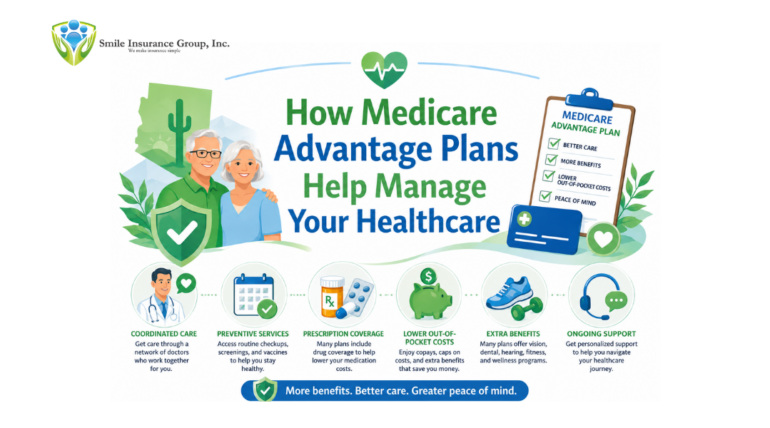
Medicare Advantage plans coordinate healthcare services by combining hospital, medical, and often prescription drug coverage into one plan while helping members manage care through provider networks, care coordination programmes, preventive services, and cost-management tools. This coordinated approach can simplify healthcare decisions, reduce out-of-pocket costs, and improve access to care.
Medicare Advantage plans coordinate healthcare services by bringing together medical coverage, hospital benefits, prescription drug coverage, preventive care, and care management under a single plan. These plans help members navigate appointments, referrals, specialist visits, medication management, and healthcare costs while promoting more efficient and connected care.
Understanding Medicare Advantage Plans
Choosing Medicare coverage can feel overwhelming, especially when you’re approaching retirement or becoming eligible for Medicare for the first time. Many beneficiaries want comprehensive coverage, manageable costs, and confidence that their healthcare needs will be coordinated effectively.
That’s where Medicare Advantage plans can provide value.
Also known as Medicare Part C, Medicare Advantage plans are offered by private insurance companies approved by Medicare. These plans must provide all the benefits covered under original Medicare (Parts A and B) and often include additional benefits such as the following:
- Prescription drug coverage (Part D)
- Dental services
- Vision care
- Hearing benefits
- Fitness programmes
- Telehealth services
- Wellness programmes
Unlike Original Medicare, which operates as separate components, Medicare Advantage integrates healthcare services into a more coordinated system.
What Does Care Coordination Mean?
Care coordination refers to the organised management of a person’s healthcare across multiple providers, facilities, and services.
For many Medicare beneficiaries, healthcare involves:
- Primary care physicians
- Specialists
- Hospitals
- Laboratories
- Pharmacies
- Rehabilitation centres
- Home health providers
Without coordination, communication gaps can occur, potentially leading to:
- Duplicate tests
- Medication conflicts
- Missed follow-up appointments
- Higher healthcare costs
- Confusing billing situations
Medicare Advantage plans are designed to help reduce these challenges by creating a more connected healthcare experience.
How Medicare Advantage Plans Coordinate Healthcare
1. Primary Care Physician Oversight
Many Medicare Advantage plans use a primary care physician (PCP) as the central coordinator of care.
The PCP often helps:
- Monitor overall health
- Manage chronic conditions
- Coordinate referrals
- Review treatment plans
- Ensure communication between providers
This central point of contact helps create a more organised healthcare experience and reduces fragmented care.
2. Specialist Referral Management
Some plan types, particularly HMOs, require referrals before seeing specialists.
While some beneficiaries initially view referrals as an inconvenience, they can offer benefits such as:
- Better communication between doctors
- More coordinated treatment plans
- Reduced unnecessary procedures
- Improved tracking of healthcare services
The referral process helps ensure specialists receive relevant medical history and treatment information before appointments.
3. Integrated Prescription Drug Management
Medication management is one of the most important aspects of coordinated care.
Many Medicare Advantage plans include prescription drug coverage, allowing members to manage healthcare and medications through a single plan.
Benefits may include:
- Formulary management
- Medication reviews
- Pharmacy network savings
- Drug interaction monitoring
- Cost-saving alternatives
This integration can help beneficiaries avoid medication errors while potentially lowering prescription expenses.
4. Chronic Condition Management Programmes
Many Medicare beneficiaries live with chronic health conditions, such as:
- Diabetes
- Heart disease
- COPD
- Arthritis
- Hypertension
Many Medicare Advantage carriers provide specialised care management programmes that may include the following:
- Nurse support
- Wellness coaching
- Disease education
- Medication reminders
- Health monitoring
These programmes help members stay engaged in their care and may reduce avoidable hospital visits.
5. Preventive Care Coordination
Preventive care plays a major role in long-term health outcomes.
Most Medicare Advantage plans emphasise preventive services such as
- Annual wellness visits
- Screenings
- Vaccinations
- Health assessments
- Routine checkups
By encouraging preventive care, plans can identify health concerns earlier and help members maintain better overall health.
Comparing Coordinated Care: Medicare Advantage vs. Original Medicare
| Feature | Medicare Advantage | Original Medicare |
| Care Coordination | Often integrated | Primarily self-managed |
| Provider Network | Usually network-based | Nationwide provider access |
| Prescription Drug Coverage | Frequently included | Separate Part D plan required |
| Additional Benefits | Commonly included | Generally not included |
| Care Management Programs | Often available | Limited |
| Single Insurance Card | Usually yes | Multiple plans may be needed |
| Preventive Care Support | Strong emphasis | Available but less coordinated |
This coordinated structure is one reason many beneficiaries explore Medicare Advantage options when comparing coverage choices.
The Role of Provider Networks
Provider networks are another key component of healthcare coordination.
Insurance companies contract with doctors, hospitals, and specialists to create networks that support integrated care delivery.
Advantages may include:
- Better communication between providers
- Streamlined referrals
- Coordinated treatment planning
- Lower negotiated healthcare costs
- Improved patient support services
Before enrolling, it’s important to verify that preferred physicians, specialists, and healthcare facilities participate in the network.
How Care Coordination Can Help Lower Healthcare Costs
Healthcare costs are a major concern for many retirees and Medicare beneficiaries.
Care coordination may help control costs by:
- Reducing duplicate testing
- Encouraging preventive care
- Managing chronic conditions proactively
- Coordinating specialist visits
- Monitoring medication usage
- Preventing avoidable hospitalisations
While costs vary by plan and location, coordinated care often supports more efficient healthcare utilisation.
Questions to Ask Before Choosing a Medicare Advantage Plan
Selecting a Medicare Advantage plan is an important healthcare and financial decision. While monthly premiums often receive the most attention, it’s equally important to understand how a plan works day-to-day and whether it aligns with your healthcare needs, preferred providers, and budget. Asking the right questions before enrolling can help you avoid unexpected costs and ensure you receive the coverage and support you need.
Are My Doctors In-Network?
One of the first questions to ask is whether your current physicians, specialists, hospitals, and healthcare facilities participate in the plan’s provider network.
Many Medicare Advantage plans use provider networks to help coordinate care and manage costs. Visiting in-network providers typically results in lower out-of-pocket expenses and a more streamlined healthcare experience. If keeping your current doctor is important, verify participation directly with both the insurance carrier and your provider’s office, as network status can change from year to year.
You should also confirm that:
- Your primary care physician is in-network
- Frequently visited specialists are covered
- Preferred hospitals and medical centers participate
- Nearby urgent care and emergency facilities are accessible
Maintaining continuity of care can be especially important if you have ongoing medical conditions or established relationships with healthcare providers.
Are My Prescriptions Covered?
Prescription drug coverage can significantly impact your overall healthcare costs. While many Medicare Advantage plans include Part D prescription drug benefits, each plan maintains its own drug formulary, which is the list of covered medications.
Before enrolling, review the formulary carefully and confirm that your current medications are included. Pay particular attention to:
- Prescription coverage tiers
- Copayment and coinsurance amounts
- Prior authorization requirements
- Quantity limits
- Preferred pharmacy networks
- Availability of generic alternatives
Even if two plans have similar premiums, differences in prescription drug coverage can result in substantial cost variations throughout the year.
What Are the Out-of-Pocket Costs?
A low monthly premium doesn’t always mean a plan will be the most affordable option overall. It’s essential to evaluate all potential healthcare expenses before making a decision.
Key costs to review include:
- Monthly Premiums: The amount you pay each month to maintain coverage.
- Deductibles: The amount you must pay before certain benefits begin.
- Copayments: Fixed fees for doctor visits, specialist appointments, and prescriptions.
- Coinsurance: A percentage of healthcare costs you may be responsible for after meeting deductibles.
- Maximum Out-of-Pocket (MOOP) Limit: The most you’ll pay for covered medical services during the plan year.
Understanding these costs can help you estimate your annual healthcare spending and avoid unexpected financial surprises, particularly if you anticipate frequent doctor visits or ongoing treatment.
What Care Management Services Are Available?
One of the advantages of many Medicare Advantage plans is access to care management and member support programs. These services are designed to help individuals navigate complex healthcare needs and improve health outcomes.
Depending on the plan, available services may include:
- Nurse care coordination
- Chronic disease management programs
- Medication reviews
- Wellness coaching
- Preventive care reminders
- Post-hospitalization follow-up support
- Telehealth services
These programs can be particularly beneficial for individuals managing conditions such as diabetes, heart disease, COPD, or multiple chronic illnesses. Coordinated support may help reduce hospitalizations, improve medication adherence, and make healthcare easier to manage.
How Does the Plan Handle Referrals?
Referral requirements vary by plan type and can influence how quickly and easily you access specialist care.
For example:
- Many Health Maintenance Organization (HMO) plans require a referral from your primary care physician before seeing a specialist.
- Many Preferred Provider Organization (PPO) plans offer greater flexibility and may not require referrals for specialist visits.
Understanding the referral process before enrolling can help set expectations and prevent delays in receiving care. If you regularly see specialists, be sure to ask how referrals are handled and whether prior authorizations are required for certain treatments, procedures, or diagnostic tests.
Additional Questions Worth Asking
Beyond the basics, consider asking a few additional questions to ensure you’re selecting the best plan for your needs:
- Does the plan offer dental, vision, or hearing benefits?
- Are telehealth appointments included?
- What wellness programs or fitness benefits are available?
- How are emergency and out-of-network services covered?
- Does the plan have high member satisfaction ratings?
- What support is available if I need help with claims or billing issues?
Taking the time to compare plans thoroughly can help you choose coverage that supports both your healthcare goals and your financial well-being.
Work with a Trusted Medicare Advisor
Because plan benefits, provider networks, prescription coverage, and costs can vary significantly, many beneficiaries find it helpful to work with a knowledgeable Medicare advisor. An experienced professional can help you compare multiple options, evaluate your healthcare needs, and select a plan with confidence.
The right guidance can help you avoid costly mistakes, preserve access to your preferred providers, and ensure you receive the coverage and support you need throughout the year.
Why Expert Guidance Matters
Medicare decisions often involve multiple variables, including provider networks, drug coverage, healthcare costs, and future medical needs.
Working with a knowledgeable Medicare advisor can help you:
- Compare plan options objectively
- Understand enrolment timelines
- Evaluate provider networks
- Review prescription coverage
- Avoid costly enrolment mistakes
- Receive ongoing support after enrolment
The right guidance can provide confidence that your healthcare coverage aligns with your current and future needs.
Why Beneficiaries Choose Smile Insurance Group
Navigating Medicare doesn’t have to be confusing.
Smile Insurance Group helps individuals and families:
- Compare multiple Medicare carriers
- Understand Medicare Advantage and supplement options
- Review prescription drug coverage
- Verify provider participation
- Receive year-round support
- Get assistance with claims and billing questions
Whether you’re turning 65, retiring, relocating, or reviewing your current coverage, expert guidance can make the process easier and less stressful.
Schedule Your No-Pressure Medicare Consultation
If you’re exploring Medicare options and want personalized guidance, contact Smile Insurance Group today. Our experienced team can help you compare plans, understand your benefits, and make informed decisions with confidence.
Frequently Asked Questions
What is the primary purpose of Medicare Advantage care coordination?
Medicare Advantage care coordination helps connect healthcare providers, services, and benefits to improve healthcare management and patient outcomes.
Do Medicare Advantage plans require referrals to see specialists?
Some plans, especially HMOs, require referrals, while many PPO plans allow direct specialist access.
Do Medicare Advantage plans include prescription drug coverage?
Many Medicare Advantage plans include integrated Part D prescription drug coverage, though plan benefits vary.
Can Medicare Advantage plans help manage chronic conditions?
Yes. Many plans offer disease management programmes, wellness coaching, and care coordination services for chronic conditions.
How do Medicare Advantage plans reduce healthcare complexity?
They often combine medical, hospital, prescription, and preventive care benefits into a single coordinated plan.